TextureReader.hpp File Reference
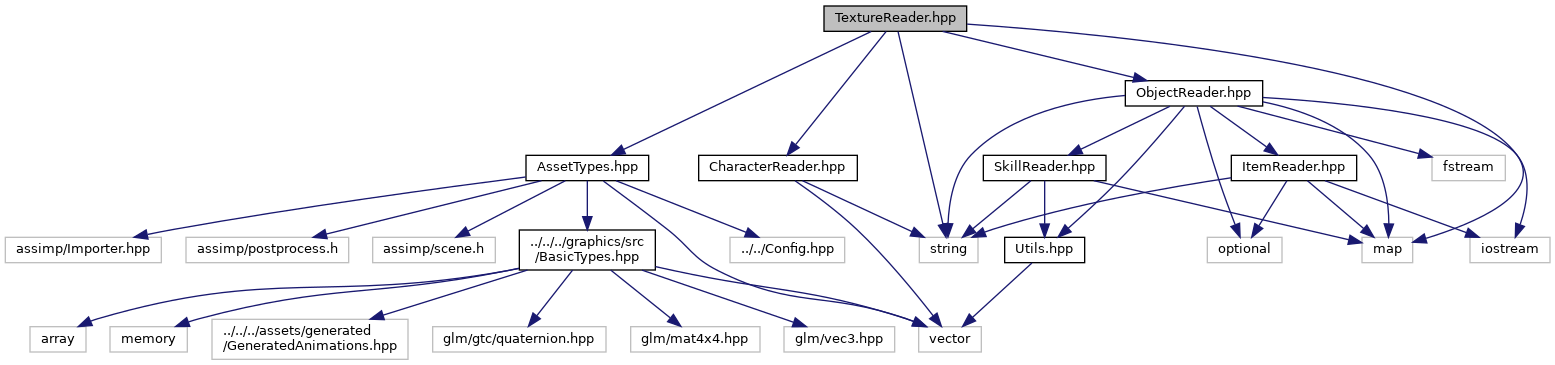
#include <map>#include <string>#include "AssetTypes.hpp"#include "CharacterReader.hpp"#include "ObjectReader.hpp"
Include dependency graph for TextureReader.hpp:
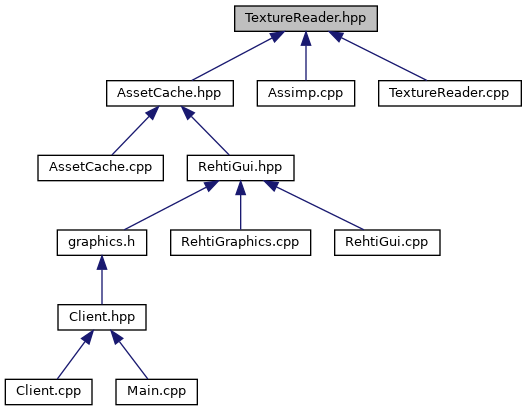
This graph shows which files directly or indirectly include this file:
Go to the source code of this file.
Functions | |
| std::map< std::string, ImageData > | loadObjectTextures (const GameObjects &gameObjects) |
| Reads all the object's textures + character textures into a map (key=filename, value=ImageData) More... | |
| std::map< std::string, ImageData > | loadCharacterTextures (const GameCharacters &gameCharacters) |
| Reads all the character's textures into a map (key=filename, value=ImageData) More... | |
| std::map< std::string, ImageData > | loadItemTextures (const GameItems &gameItems) |
| Reads all the item object textures and item icons into a map (key=filename, value=ImageData) More... | |
| std::map< int, ImageData > | loadMapTextures () |
| Reads all different the map texture files. More... | |
| std::vector< std::vector< int > > | loadMapTexturePositions () |
| Loads map texture positions. E.g. which tile contains which texture. More... | |
| ImageData | createAreaBlendMap (const std::vector< std::vector< int >> &mapTexturePositionMatrix, int rowOffset, int columnOffset) |
| Creates a blend map for one area. Blend map shows which texture is used on each tile. More... | |
| ImageData | loadDefaultTexture () |
| Loads default texture into memory. More... | |
Function Documentation
◆ createAreaBlendMap()
| ImageData createAreaBlendMap | ( | const std::vector< std::vector< int >> & | mapTexturePositionMatrix, |
| int | rowOffset, | ||
| int | columnOffset | ||
| ) |
Creates a blend map for one area. Blend map shows which texture is used on each tile.
- Note
- Supports only 5 different textures per area
- Parameters
-
mapTexturePositionMatrix Matrix of texture positions with the corresponding texture id rowOffset Areas row offset in the mapTexturePositionMatrix columnOffset Areas column offset in the mapTexturePositionMatrix
- Returns
- Blend map image data
Here is the caller graph for this function:

◆ loadCharacterTextures()
| std::map<std::string, ImageData> loadCharacterTextures | ( | const GameCharacters & | gameCharacters | ) |
Reads all the character's textures into a map (key=filename, value=ImageData)
- Parameters
-
gameCharacters GameCharacters
Here is the caller graph for this function:

◆ loadDefaultTexture()
| ImageData loadDefaultTexture | ( | ) |
Loads default texture into memory.
- Returns
- ImageData of the default texture
Here is the caller graph for this function:

◆ loadItemTextures()

◆ loadMapTexturePositions()
| std::vector<std::vector<int> > loadMapTexturePositions | ( | ) |
Loads map texture positions. E.g. which tile contains which texture.
- Returns
- Matrix of texture positions. Position is indicated by the row and column. The texture id on that position is the cell value.
Here is the call graph for this function:

Here is the caller graph for this function:

◆ loadMapTextures()
| std::map<int, ImageData> loadMapTextures | ( | ) |

◆ loadObjectTextures()
| std::map<std::string, ImageData> loadObjectTextures | ( | const GameObjects & | gameObjects | ) |
Reads all the object's textures + character textures into a map (key=filename, value=ImageData)
- Parameters
-
gameObjects GameObjects
Here is the caller graph for this function: